Aromatase inhibitors (AIs) were launched over 2 decades ago, but even with the introduction of the CDK4/6i class, there has been little innovation in endocrine therapies (ETs) since.1-3
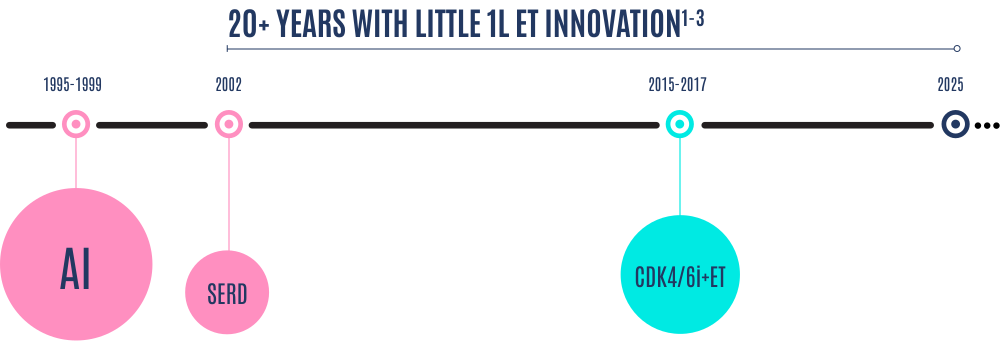
 Endocrine therapy backbones really have seen little innovation in over two decades . . . but to help address resistance mechanisms, novel endocrine therapy agents must be developed and further integrated into treatment paradigms.
– Erika P. Hamilton, MD
Director, Breast Cancer Research
Sarah Cannon Research Institute


The goal: Extend patients’ time on 1L3-9
1L treatment response is key as outcomes worsen in later lines. A key goal in HR+/HER2- metastatic breast cancer (mBC) is to prolong the time patients have on 1L ET.

AI use may limit ET efficacy in 1L3,10,11
Despite the effectiveness of AIs + CDK4/6i as the SOC in 1L mBC, AIs leave the ER intact, enabling the potential for self-activation and downstream cancer growth. This may lead to endocrine resistance.

Emerging research in ET approaches
Emerging therapies may show potential advancements in ER degradation in the hope of supporting patients' time on 1L.

How might modernizing our understanding of 1L treatment approaches affect patients’ time on ET?1-3
1L=first line; CDK4/6i=cyclin-dependent kinase 4/6 inhibitor; ER=estrogen receptor; HER2-=human epidermal growth factor receptor 2-negative; HR+=hormone receptor-positive; SERD=selective estrogen receptor degrader; SOC=standard of care.