A key goal in 1L HR+/HER2- metastatic breast cancer (mBC) is to maximize the time patients have on endocrine therapy (ET).2-4 This time can be shortened due to the emergence of endocrine resistance mechanisms, which can originate at the level of the estrogen receptor (ER).1,5,6
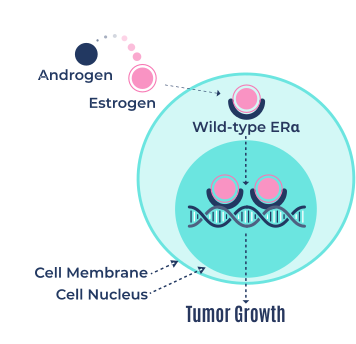
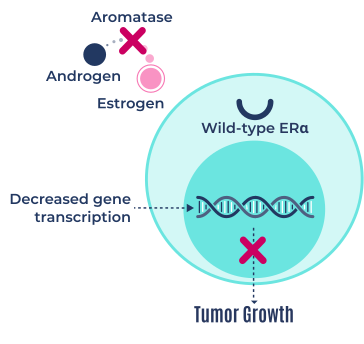
AROMATASE INHIBITORS USE A SINGLE-ACTION MECHANISM TO BLOCK CONVERSION TO ESTROGEN3,8
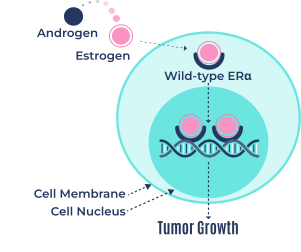
Without AI treatment3,8
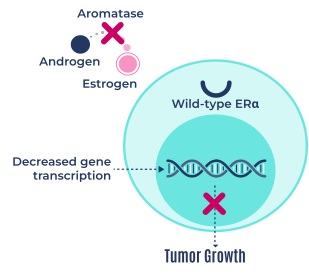
How AIs work3,8
Estrogen receptor can become self-activated through mechanisms of endocrine resistance1,3,7
Self-activation after AI use
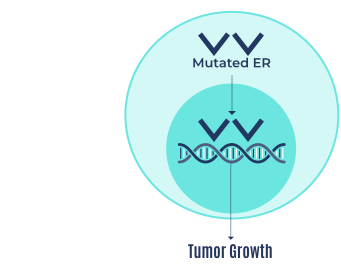
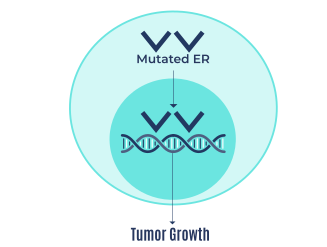
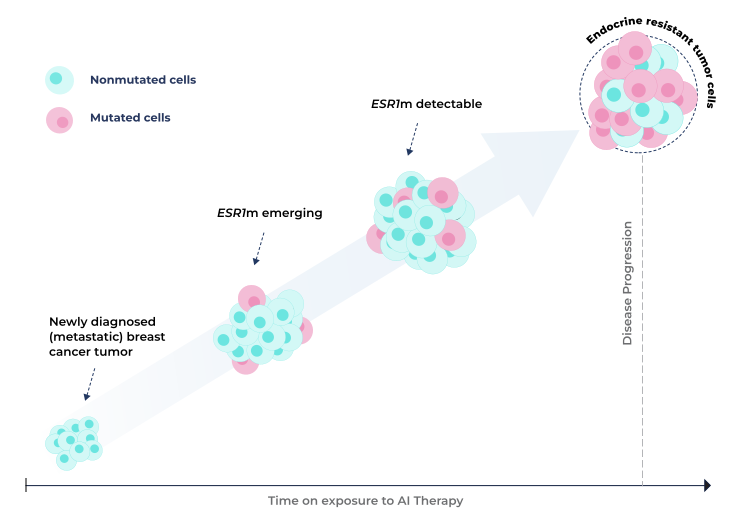
AI exposure can lead to endocrine RESISTANCE — progression may occur6,7,10,11
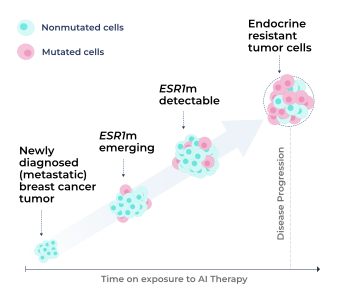
Emergence of ESR1m may be detectable 3-6 months before clinical disease progression
 We know despite the fact that aromatase inhibitors are effective in the first line, inevitably, resistance develops for many patients.
– Erika P. Hamilton, MD
Director, Breast Cancer Research
Sarah Cannon Research Institute


Early signals, such as ESR1m, can indicate emerging endocrine resistance7,10,11
Without timely intervention, this can lead to progression and limit patients' time on treatment.6,10
High prevalence
UP TO 40%
of patients with mBC develop ESR1m upon exposure to AIs12
Endocrine resistance mechanisms like ESR1m have been associated with7,11:
Increased risk
3x GREATER RISK
for disease progression 6 months after the mutation emerges in patients with mBC
Poor response
83%
of mBC patients with ESR1m experienced a poorer response to ET versus nonmutated

To maximize patients’ time on 1L, how can we innovate our thinking TO INTERCEPT endocrine resistance at its earliest emergence?
1L=first line; ER+=estrogen receptor-positive; ERα=estrogen receptor alpha; ESR1=estrogen receptor 1; HER2-=human epidermal growth factor receptor 2-negative; HR+=hormone receptor-positive.